

The Nymphaeum is a Roman archaeological site in downtown Amman, where the remains of a large fountain complex stand at the intersection of Cardo Street and Decumanus Street. You can pair a look at its surviving wall with other Roman-era sites in the centre, including the Roman Theatre and Odeon.
- Location: Intersection of Cardo Street and Decumanus Street, central Amman
- From the Roman Theatre: About 600 meters west
- Roman date: Built in 191 AD, according to the Ministry of Tourism and Antiquities
- What remains: Part of the rear wall, with carvings and relief sculptures
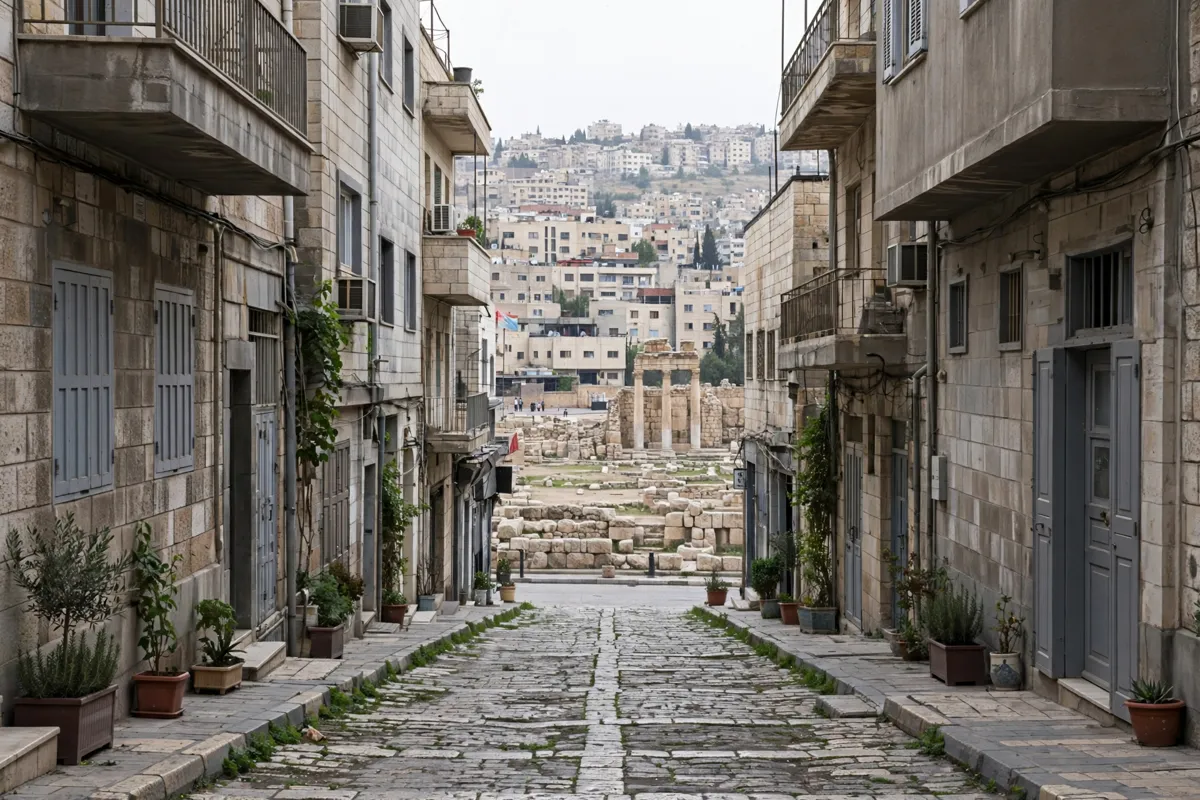
Where to find the Nymphaeum
The Nymphaeum stands at the intersection of Cardo Street and Decumanus Street in central Amman. The Department of Antiquities of Jordan identifies it as an archaeological site and places it approximately 600 meters west of the Roman Theatre.
That position makes it straightforward to connect the fountain site with the Roman Theatre and Odeon, which the Ministry of Tourism and Antiquities also lists among Amman’s Roman-era attractions. For more context on those nearby remains, you can read about the Roman Theatre and Odeon in Amman.
What remains of the Roman fountain
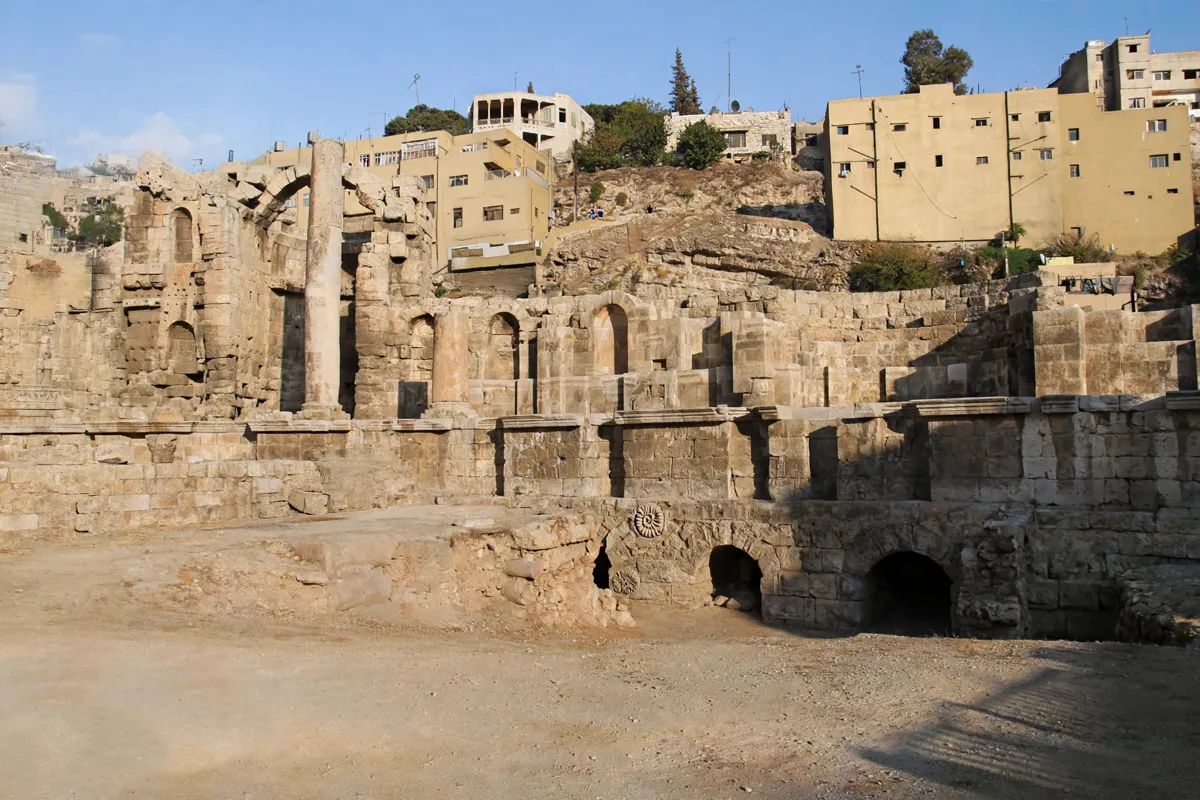
The Nymphaeum was a substantial Roman fountain complex, but only part of its rear wall remains. The Department of Antiquities describes the building as semi-octagonal and symmetrical, with a façade that measured 65 meters in length.
Built in 191 AD, the structure stood over the Amman Stream on four-barrel vaults. A channel originating from Ras Al-Ain supplied its water. Limestone formed the building, and the exterior wall used bossed stone.
The original complex was two stories tall, with fountains, mosaics and stone carvings. The Ministry of Tourism and Antiquities says it may also have included a swimming pool measuring 600 square meters.
On the second floor, three large niches and two rows of smaller niches are recorded; marble statues are believed to have stood in niches on the front façade.
Carvings and relief sculptures showing vegetal, animal, geometric and human forms remain displayed on the surviving wall. The former front courtyard has since been occupied by houses and storage facilities, so the visible remains represent only part of the original site.
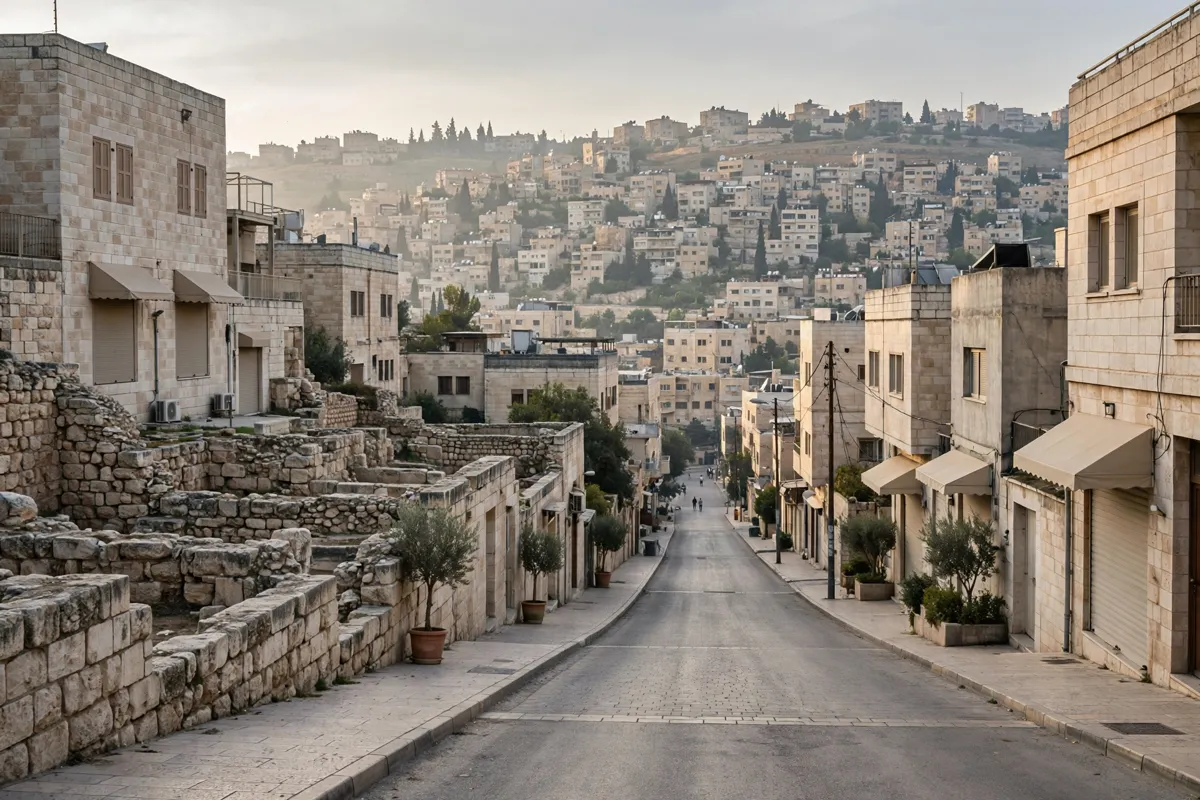
Adding the site to a downtown walk
The Nymphaeum fits naturally into a downtown walk focused on Amman’s Roman remains. Its location west of the Roman Theatre gives you a clear way to link the two sites, with the Odeon also among the Roman-era attractions identified by the Ministry of Tourism and Antiquities.
For a broader downtown route, the downtown-first Amman itinerary puts the city centre in focus.
The fountain was more than a decorative feature: the Department of Antiquities says citizens gathered there to collect water each day, and also used the complex for recreation and leisure. That role helps explain why the site included facilities beyond its fountains.
You can pair Roman landmarks with the area’s markets and streets using this guide to downtown Amman’s souqs and landmarks.
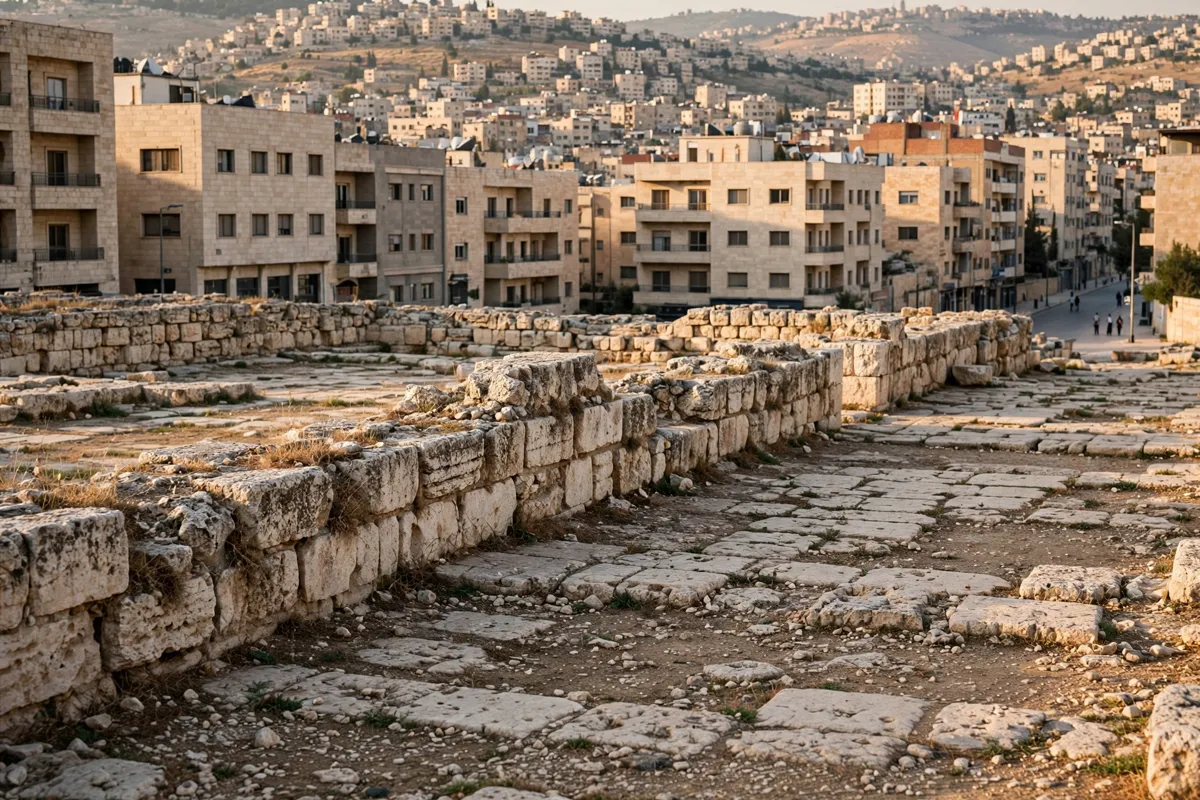
Checking access and conservation status
The Nymphaeum is about a 2-minute walk from Khan Khediwe Hotel.
Before setting out, check the official site of the Department of Antiquities of Jordan for current access information. The surviving wall and its carvings are the clearest features to look for when viewing the remains.
FAQs
How old is the Nymphaeum in Amman?
The Ministry of Tourism and Antiquities says the Amman Nymphaeum was built in 191 AD. The Department of Antiquities dates the site to the 2nd century AD.
What was the Nymphaeum used for?
It served as a place where citizens collected water, as well as a setting for recreation and leisure. The complex included fountains and may have had a large swimming pool.
How much of the Roman Nymphaeum remains?
Only part of the rear wall remains. Carvings and relief sculptures are still displayed on it.
Where is the Nymphaeum in relation to the Roman Theatre?
The Nymphaeum is approximately 600 meters west of the Roman Theatre, at the intersection of Cardo Street and Decumanus Street.